FRENCH
Other Cuisines
Marga's Food

marga@lacabe.com
| Lyon is one of France's largest - and oldest - cities. Starting as a Roman garrison about 2,000 years ago, it is now France's economic engine. Located where the Rhône and Saône rivers converge, Lyon has a sub-tropical climate, with temperate winters and scalding hot and humid summers. It's located in the middle of a rich agricultural region, giving cooks in the city access to a wide variety of fresh meats and produce. Bress poultry and Charolais beef are particularly valued.
Today, Lyon is considered the gastronomic capital of France, which gives it a claim to being the gastronomic capital of the world. Lyon's charcuterie gained famed during the Renaissance, as Lyonnaise cooks transformed the offal the working classes were left to consume into marvelous sausages and pâtés.
Today, much of Lyon's culinary might is offered a small bouchons, tiny rustic bistros which dot the city and specialize in local fare.
Among Lyon's culinary specialties are pâté en croûte, the bacon-filled salade Lyonnaise, quennelles, huge fish dumplings served in a crayfish based Nantua sauce, tripe and pork cheeks in sauce. I am a rather cautious cook and eater, so for my quick sojourn into the cuisine of Lyon, I made instead:
Poulet au Vinaigre
Chicken Lyonnaise
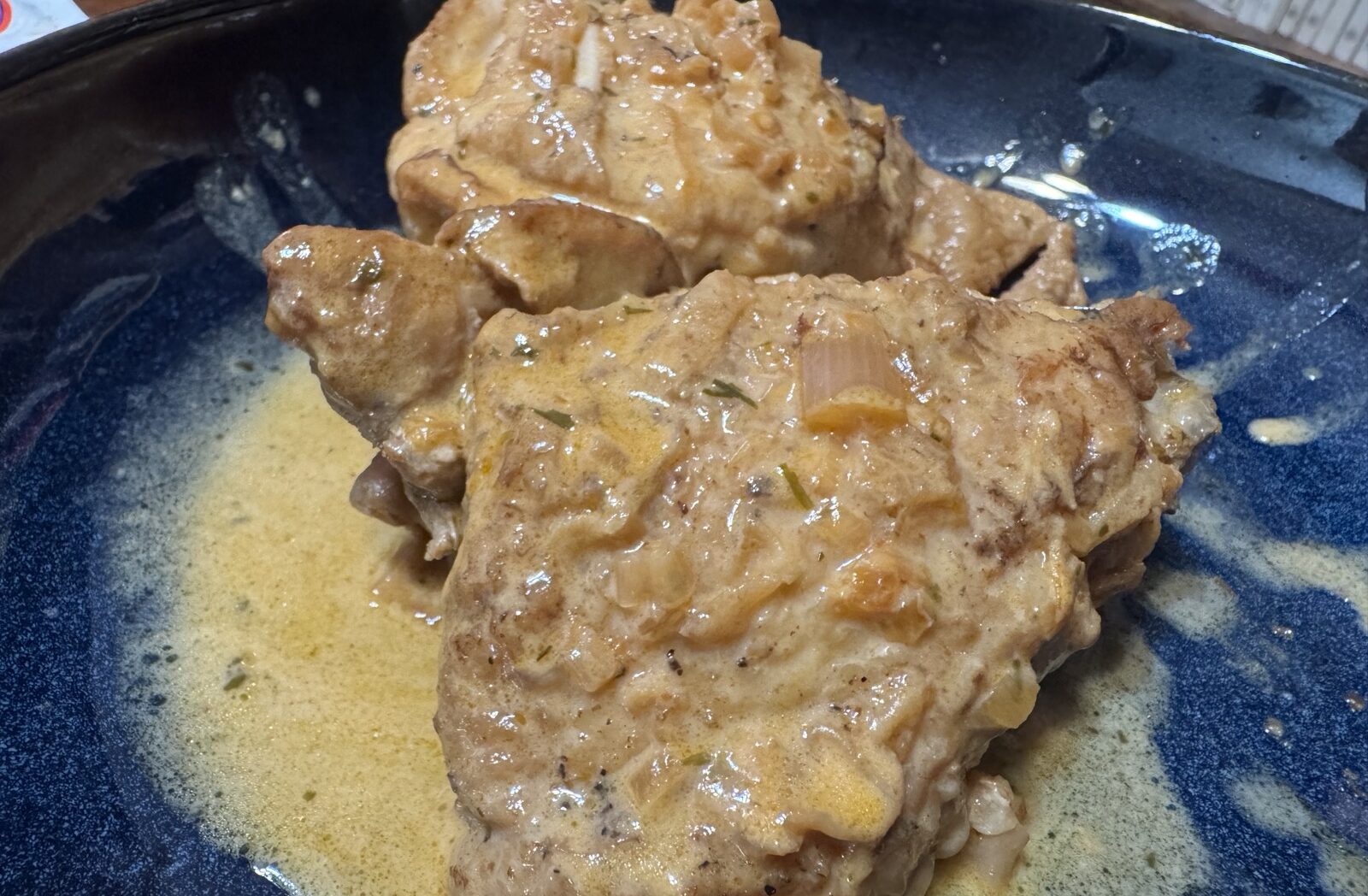
There is a reason why Chicken Lyonnaise has become ubiquitous at Lyonnaise bouchons and French bistros alike. This rustic, peasant dish is relatively easy to make and absolutely delicious. It gained international fame as it was served as part of the last dinner in the Titanic . It can be made with both bone-in and boneless chicken, and while I went for the former, I think it might actually be best with the latter.
The original recipe called for fresh tarragon, but it's not on season here, so I decided to use less instead, but add it sooner in the cooking process. As I said, the result was delicious.
PRINT PDF
Chicken Lyonnaise
Ingredients
- 8 chicken parts
- salt and pepper to taste
- 1 Tbsp butter
- 1 Tbsp olive oil
- 4 shallots, chopped
- 4 garlic cloves, peeled and halved
- 1 Tbsp tomato paste
- 3/4 cup red wine vinegar
- 1 cup white wine
- 1 cup chicken broth
- 3 sprigs of thyme or 1 tsp dried thyme
- 1 Tbsp minced fresh tarragon or 1 tsp dried tarragon
- 1 cup heavy cream
Directions
Pat-dry chicken parts and season with salt and pepper to taste.
Melt the butter and olive oil in a sauté pan over medium heat. Working in batches, if necessary, place the chicken on the fat, skin-side down. Cook until browned, 6 - 8 minutes. Turn and cook for 3 more minutes. Transfer to a plate and set aside.
Pour off all but 2 Tbsp of fat from the pan. Turn heat down to medium-low. Add the shallot and garlic and sauté, stirring frequently, until light brown. Add the tomato paste and cook for 30 seconds. Turn heat up to medium-high, add the vinegar and deglaze the pan. Continue simmering until reduced to a syrupy consistency. Add the wine and simmer for 3 minutes. Add the chicken broth, the thyme and the tarragon, if using dried.
Return chicken to the pan, bring to a boil, reduce heat to medium-low, cover and simmer until the chicken is cooked through, about 15 to 25 minutes. Remove the chicken from the pan and keep warm.
Bring cooking liquid to a boil over medium-high heat. Simmer for 10 minutes, until it reduces somewhat. Reduce heat to medium and stir in half of the cream and taste for acidity. If still overly acidic, add the rest. Simmer until the sauce reduces to a thick consistency, which almost coats the back of a spoon. Lower heat to medium-low and stir in the tarragon, if using fresh. Taste and adjust salt and pepper seasoning. Return chicken to the pan and allow to warm up before serving.
|
Adapted from Stephane's recipe at The French Cooking Academy French cuisines I've explored so far: French, Alsatian, Auvergnat, Belgian, Bordeaux, Bourguignonne, Breton, Champagnoise, Corsican, Gascon, Ligérienne,
Limousin, Lorrainer, Luxembourger, Medieval French, Monégasque
Do you have a comment on this recipe? Please make it here
|