Other Cuisines
Marga's Food

marga@lacabe.com
| The Medieval English diet was based on cereals: oats, barley and rye baked into breads, or made into a porridge or a pottage, a stew which incorporated cabbage, peas and root vegetables. Meat, mostly pork, was used sparingly for every day dining - both by the lower and upper classes. Festivals, however, were a time of abundance, where roasted meats and fish were eaten with abandon.
As the Medieval period went on, however, trade routes brought foreign foods to England and diversified the diet of the upper class. The new commercial class became able to afford some of these foods and recipes became more complex and tasty.
For my quick sojourn into Medieval English cuisine, this is the recipe I made:
Bokenade
Medieval Meat Stew
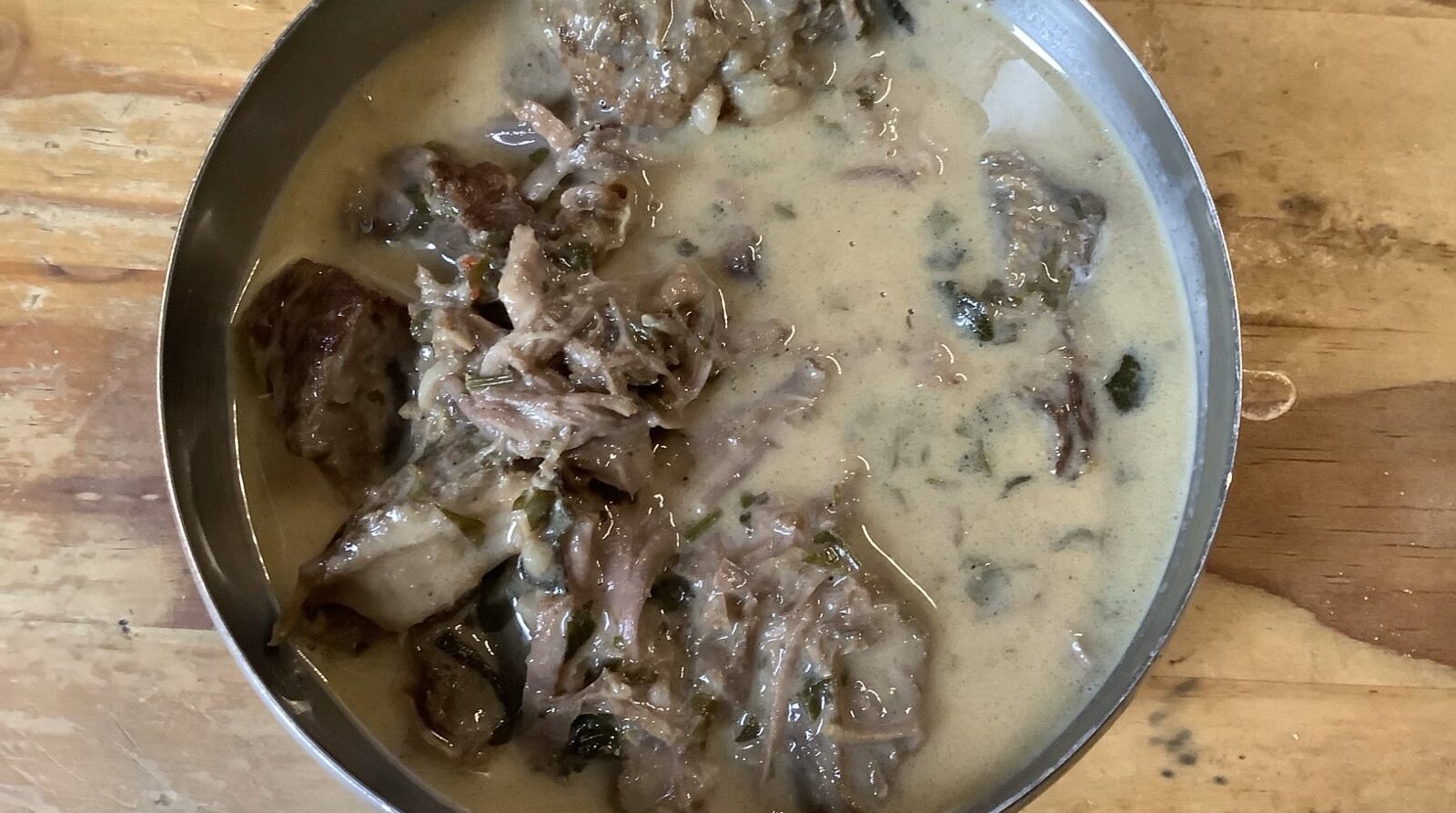
Bokenade is an "eternal" stew, one that kept in a constant simmer in medieval taverns, with more meat added as needed. This recipe, adapted by food cook/youtuber Max Miller does away with the constant simmering requirement, but incorporates ingredients well known at the time. As some of those ingredients - namely hyssop and verjus, are not readily available in the US, what was a cheap stew in medieval England becomes an expensive one here. After making it according to the instructions, I actually recommend using cheaper substitutes.
Hyssop appears to be a kitchen garden herb in England, but it does not seem to be available fresh here in California. Not only do food markets not carry it, but I couldn't find it on Facebook marketplace - which has become my source for finding home grown exotic herbs and fruits. They do sell it dry through Amazon to be used as an herb but also a tea. I was intrigued by the second alternative and took the plunge and bought some. It is weird. As a tea, it tastes closer to a broth. Make sure to not sweeten it. I don't know that it provided that much of a flavor to the stew, however, because the acidity of the verjus overwhelmed all other flavors.
Verjus is a very sour juice made from unripe grapes. It has tones of vinegar, without the fermented aspect. I've used verjus once before, over two decades ago, for a foie gras preparation, but the store where I'd bought the bottle is long gone. Amazon sells it, but with bottles at about $20 it seemed an unnecessary luxury for just a stew - though reviews said it was necessary. Verjus is used extensively in Syrian, Lebanese and Persian food, so instead I got a bottle from a nearby Middle Eastern market. Alas, this was a mistake. Not only did the label warn me that the product contained lead (and there is no safe level of lead for humans), but the verjus had a thick, creamy consistency - very different from the liquid verjus I'd used in the past. The real mistake, however, was trusting the recipe and adding 1/2 a cup of it to the stew. This was far too much, it made the sauce way too acidic for any other flavors to push through. If you make this with verjus, I recommend you add it one tablespoon at the time, and taste after every addition. Or you might want to substitute with a combination of grape juice and vinegar - though again, adding it gradually and tasting.
On the plus side, I loved the consistency and palate feeling of the beef, which was impossibly smooth. I used short ribs, as these were on sale that week, but you can use other bone-in meats.
PRINT PDF
Bokenade
Ingredients
- 4-5 lbs short ribs
- salt to taste
- beef broth or water, about 4 cups
- 1/4 cup finely chopped parsley
- 5 sage leaves, chopped
- 1 tsp dried hyssop
- 1/2 tsp mace
- 2 cloves
- 4 egg yolks
- 1/2 tsp ground ginger
- pinch of ground saffron
- 1/3 cup verjus
Directions
Season short ribs with salt. Cut a bit of fat off one of the short ribs. Heat a cooking pot over high heat and add the fat. Cook until somewhat melted. Add the short ribs and brown on all sides. Add enough beef broth or water to cover the ribs. Bring to a boil, then turn down heat to low and simmer, covered, until the meat falls off the bone, 1 to 2 hours.
Using thongs, remove the meat from the pot, reserving the broth. Cut the meat into bite-sized pieces. Remove the bones from and discard. Strain the broth.
Return the meat chunks to the cooking pot you previously use. Cover with the strained broth. Turn heat up to medium and add the parsley, sage and hyssop. Stir in the mace and cloves. Bring to a boil, cover, then turn heat to low and simmer for about 2 hours, adding more broth if necessary.
Turn off the heat. Pour 1/2 cup of the broth into a small pitcher.
Whisk egg yolks in a bowl until smooth. Gradually, pour the broth into the bowl, whisking constantly. Whisk in the ginger, the saffron and 1 tsp of salt. Right before serving, stir in the egg mixture and the verjus into the cooking pot.
|
Adapted from a recipe at Tasting History
Historical cuisines I've cooked so far:
American Colonial, Ancient Persian, Anglo-Saxon, Ante BellumClassical Greek, Cowboy, East German, Elizabethan, Georgian England, Imperial China, Italian Renaissance
British cuisines I've cooked so far: Anglo-Indian, Anglo-Saxon, Cornish, Dorset, English, Irish, Elizabethan, Georgian England, Lancastrian
Do you have a comment on this recipe? Please make it here
|